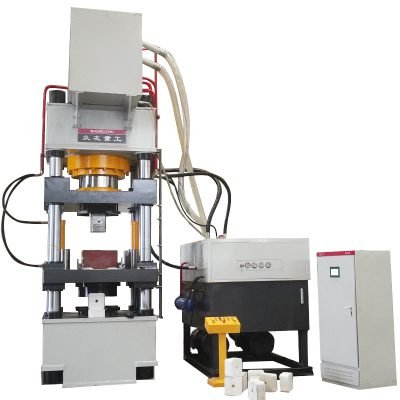
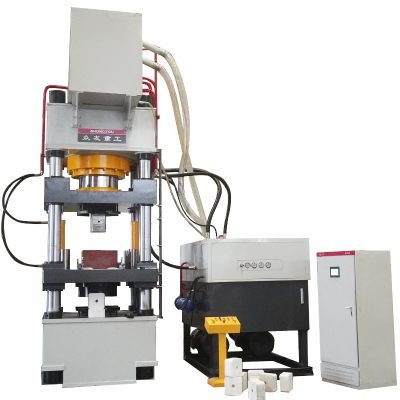
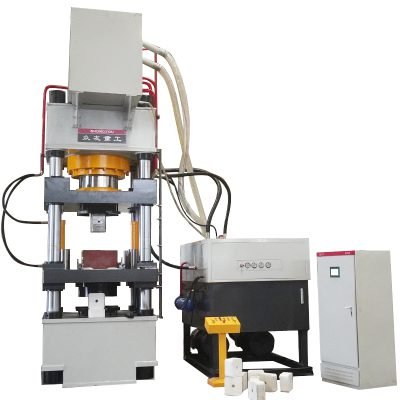
Did you know that over 68% of salt brick production facilities in China’s coastal provinces now rely on fully automated systems — not just for speed, but for batch consistency and regulatory compliance? It’s not hype; it’s necessity. In Zhejiang — home to some of the most advanced light-industrial manufacturing clusters in East Asia — automation in salt brick fabrication has evolved from a luxury into the baseline expectation for export-ready output. That shift means buyers aren’t just comparing specs anymore; they’re evaluating how well a machine integrates into real-world workflows, handles regional raw material variability (like Zhejiang’s high-moisture sea-salt blends), and survives three-shift operation without constant technician intervention.
So what exactly makes a “fully automatic” salt brick machine stand out in Zhejiang’s crowded market — and why do so many importers still get burned by choosing the wrong model? From my 12 years of field support across Hangzhou, Ningbo, and Wenzhou factories, I’ve seen firsthand how “fully automatic” is often misused as marketing fluff — machines labeled as such still require manual die cleaning every 90 minutes or need an operator to reposition molds mid-cycle. True full automation here means closed-loop control: moisture sensors adjusting compression force in real time, servo-driven ejection that compensates for salt crystallization variance, and PLC logic that auto-calibrates after every 500 bricks. The top-tier models — like the YH-8000A from Ningbo Yuhuan and the ZJ-AMX Pro from Shaoxing Zhongji — don’t just run unattended for 8 hours; they flag subtle drifts in compaction density before they become rejects. That’s the difference between “automatic” and *operationally autonomous* — and it’s why clients who cut corners on verification end up with 17% higher scrap rates than those who test-run units onsite with their own salt batches.
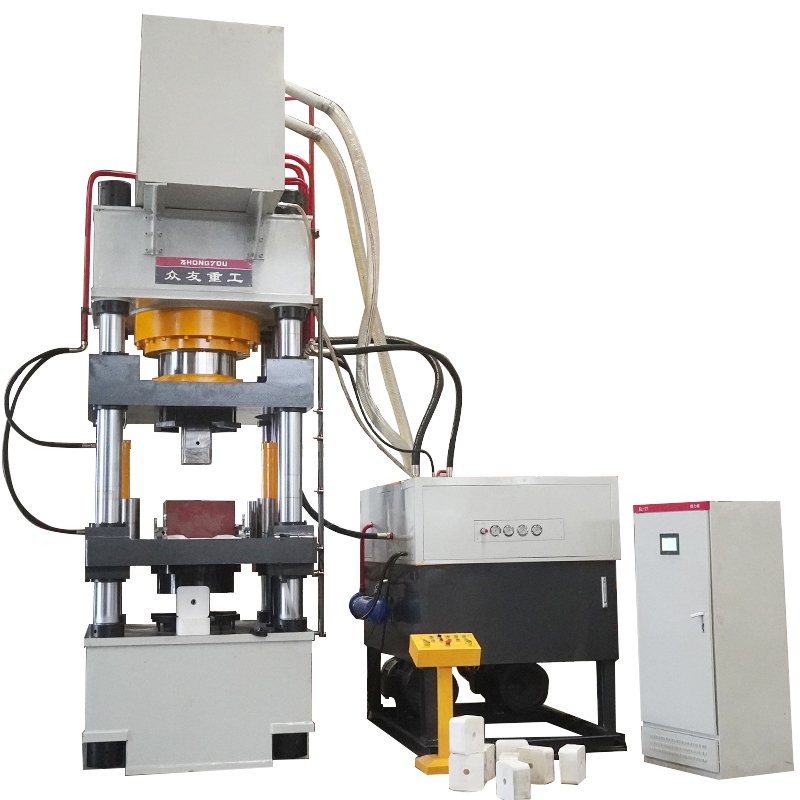
Now, if you’re weighing options, you’re probably wondering: “Which models actually deliver on that promise — without over-engineering or pricing themselves out of reach?” Let’s be honest — the Zhejiang market is saturated with copycat builds masquerading as OEM-grade. But three units consistently earn repeat orders from EU-certified processors: the aforementioned YH-8000A (notable for its dual-hydraulic + servo hybrid drive — rare in this price band), the Jinhua-based Hengli HL-6600i with its patented anti-caking mold coating (a godsend when working with humid Fujian-sourced sea salt), and the newer Wenzhou Xinlong XL-Auto+ with cloud-connected diagnostics. What sets them apart isn’t just build quality — it’s how they handle *Zhejiang-specific conditions*: ambient humidity swings from 45% to 92%, frequent power fluctuations even in industrial parks, and the local preference for 250g–500g rectangular bricks over standard cubes. I’ve watched the XL-Auto+ reroute its hydraulic sequence during a brownout without dropping cycle count — something most “industrial-grade” rivals can’t manage without a hard reset. That kind of resilience doesn’t show up in spec sheets; it shows up in uptime logs.
Of course, picking the right model isn’t just about hardware — it’s about service architecture. Here’s where many overseas buyers stumble: they assume “Zhejiang-made” means instant spare parts access, but unless your supplier maintains a bonded warehouse in Ningbo Port *and* employs bilingual field engineers certified on your specific unit, downtime multiplies fast. I once consulted for a German distributor whose “fully automatic” line sat idle for 11 days because a single solenoid valve wasn’t stocked locally — and the manufacturer insisted on shipping from Shenzhen via air freight. Lesson learned? Ask for their average MTTR (mean time to repair) *in your language*, verified by third-party maintenance reports — not brochures. Also, push for remote diagnostics capability: the best Zhejiang suppliers now offer WeChat-linked monitoring dashboards showing real-time tonnage, cycle variance, and even predictive alerts for wear on compression rams. It’s not sci-fi — it’s standard for any serious 2024 deployment.
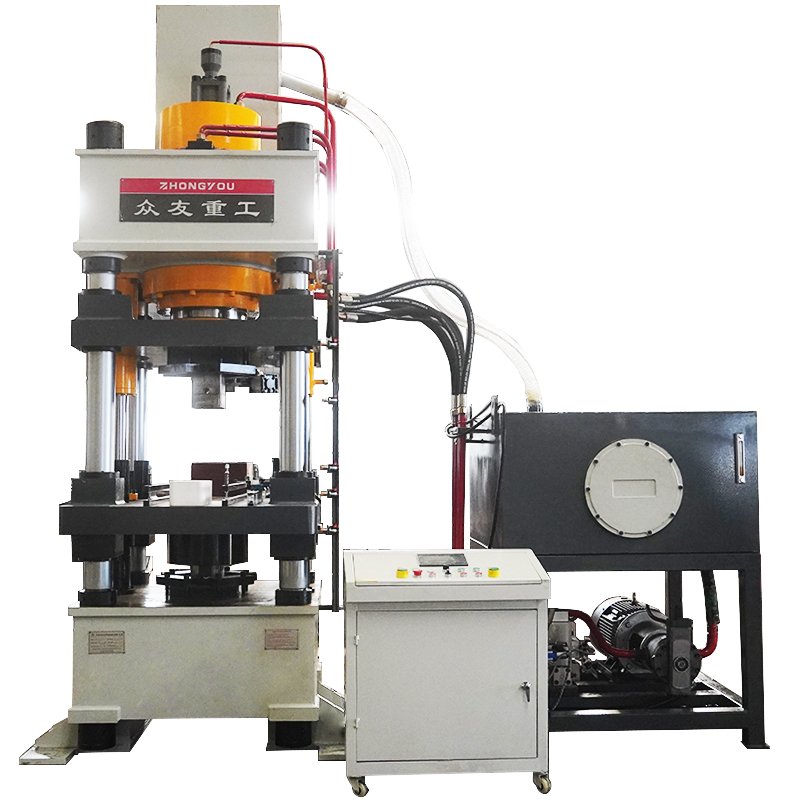
At the end of the day, recommending “the best” fully automatic salt brick machine in Zhejiang isn’t about listing specs — it’s about matching operational reality to engineering intent. The machines that endure aren’t the flashiest, but the ones built with humility: acknowledging that salt isn’t uniform, electricity isn’t perfect, and operators aren’t robots. If your priority is predictable output — not just peak throughput — then look past the “fully automatic” label and ask how the system behaves when things go slightly sideways. Because in real-world salt brick production, consistency isn’t measured in bricks per hour — it’s measured in how quietly the machine keeps running while you’re having lunch.