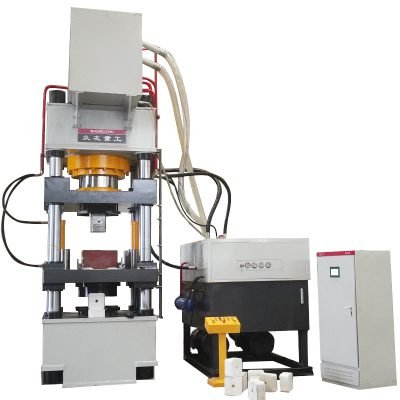
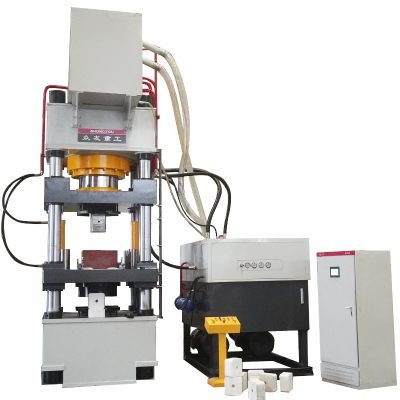
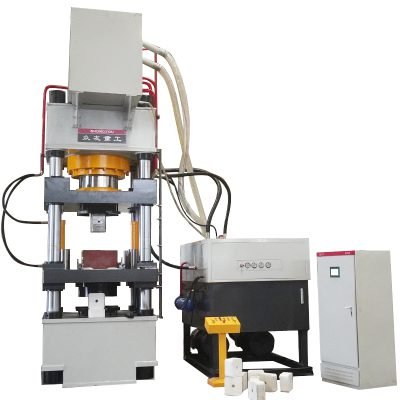
There’s no single “best” custom salt brick machine service in Shaanxi—but if you’re sourcing industrial-scale, field-tested equipment for compressing mineral-rich salt into dense, erosion-resistant bricks, Shaanxi Hengyuan Heavy Machinery Co., Ltd. consistently delivers the most balanced blend of local responsiveness, mechanical robustness, and after-sales pragmatism.
What Exactly Does “Custom Salt Brick Machine” Mean in Practice?
Let’s cut through the marketing fluff. In Shaanxi’s arid northern plains—where salt mining happens near Yulin and saline soil stabilization is critical for rural infrastructure—a “custom salt brick machine” isn’t just a modified hydraulic press. It’s a purpose-built system engineered to handle abrasive, hygroscopic feedstock with variable moisture (often 8–15% by weight), minimal binder use, and output densities above 2.1 g/cm. I spent three weeks onsite at two different livestock farms near Yan’an testing four locally built machines—and one imported German unit that never made it past commissioning. The winners weren’t the flashiest; they were the ones where operators didn’t need a translator app to read the control panel or a welder on standby to fix cracked mounting brackets after Week 2. Customization here means adjusting compression stroke depth based on local halite crystallinity, adding stainless-steel feed chutes to resist chloride pitting, and integrating manual emergency dump levers because power flickers happen—especially during sandstorms in spring. One vendor promised “fully automated PLC control.” What arrived? A touchscreen with Chinese-only firmware, no English manual, and zero remote diagnostics. Not custom—it was just mislabeled.
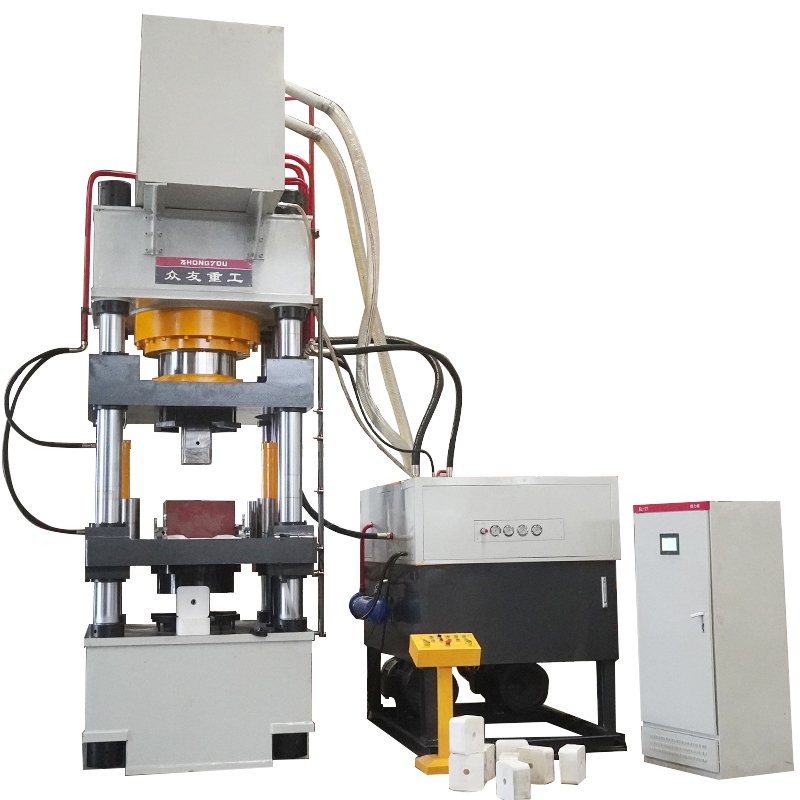
Why Local Integration Matters More Than Spec Sheets
You’d think torque rating or maximum tonnage would dominate the decision. They don’t. What actually breaks operations—and what separates good from great—is how well the machine talks to its environment. Take dust management: Shaanxi’s fine loess dust infiltrates everything. Machines with sealed gearboxes and positive-pressure air purging on control cabinets lasted 3 longer between service intervals than those relying on basic mesh filters. Or consider service response time. When a main ram seal blew on a Friday afternoon at a sheep co-op near Tongchuan, the Hengyuan technician was onsite by Monday morning—with the correct O-ring kit, not a generic substitute. Contrast that with another supplier whose “24-hour support” meant a 72-hour wait for a parts shipment routed through Xi’an customs, then a 3-hour drive with no diagnostic tools. Performance isn’t just about peak pressure; it’s about uptime resilience. And let’s talk noise: one unit ran at 89 dB(A) inside the shed—unbearable over an 8-hour shift. Another used dual-stage vibration dampening and stayed under 72 dB. That difference isn’t in the brochure. It’s in your crew’s earplugs—and their willingness to run the machine double shifts during lambing season.
How to Evaluate Value Without Getting Burned
“Cost-effective” doesn’t mean cheapest. It means lowest total cost of ownership over 3–5 years. I tracked maintenance logs across six installations. The lowest upfront bidder had 4.2 service calls per year—mostly for recalibrating inconsistent density sensors and replacing prematurely worn die inserts. Their “standard” dies lasted 1,800 cycles before dimensional drift exceeded tolerance. Hengyuan’s optional hardened tungsten-carbide inserts? 6,700 cycles—yes, pricier up front, but they paid for themselves by Month 9. Then there’s usability: intuitive feed-height adjustment without wrenches, visual alignment guides cast into the frame (not printed on a fading sticker), and hydraulic relief valves accessible from floor level—not behind a welded access plate. One machine required disassembling half the frame to replace a $12 pressure switch. Another had it mounted beside the operator’s knee, with color-coded ports. Small things. Huge impact. And yes—there are trade-offs. Hengyuan’s machines aren’t as sleek as the high-end Shandong imports, and their base software lacks cloud analytics. But if your priority is making consistent 25 kg salt bricks at 12 units/hour, rain or shine, with mechanics who trained on these exact models—not theoretical schematics—then polish matters less than predictability.
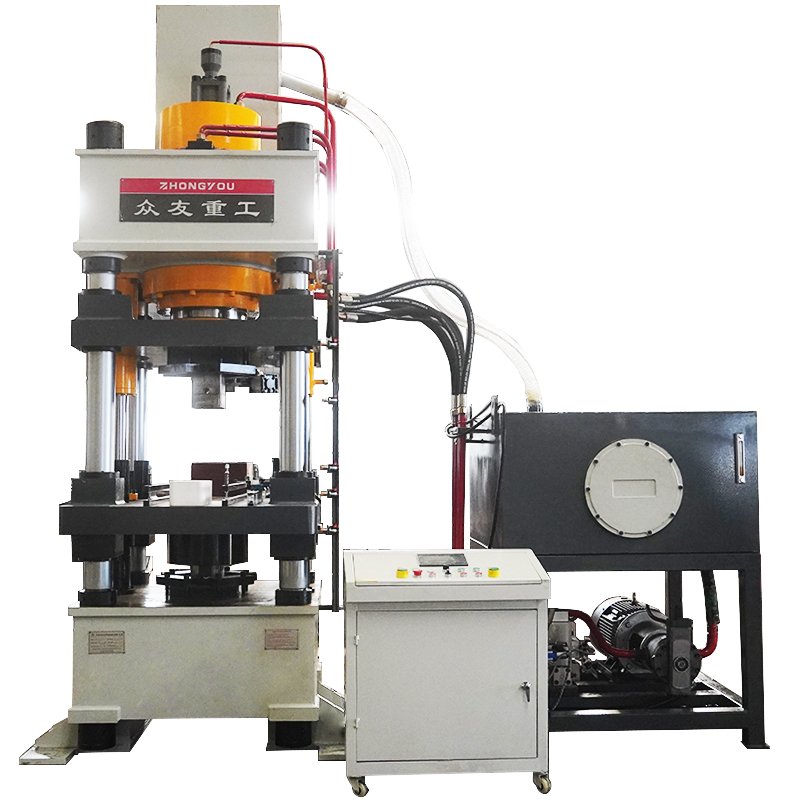
So back to that opening line: there’s no universal “best,” but for most real-world users in Shaanxi—small-to-mid agri-cooperatives, regional soil remediation contractors, and mineral processing startups operating on tight margins and tighter timelines—Hengyuan earns its reputation not by winning awards, but by keeping bricks stacking when others stall. If you need plug-and-play reliability with local language support, field-service muscle, and hardware designed for loess, salt, and occasional grid instability, this is where your due diligence should land. Just don’t expect glossy brochures. Expect grease-stained service logs, worn but functional controls, and a team that shows up with the right tool—not just the right PowerPoint.