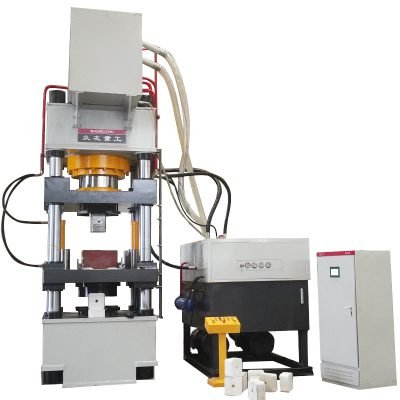
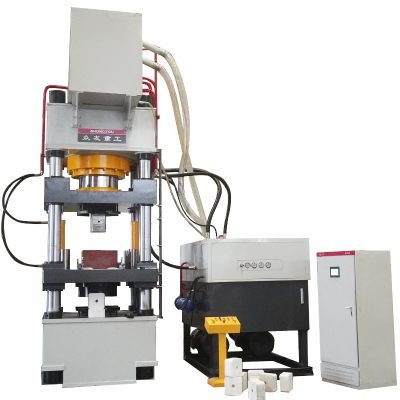
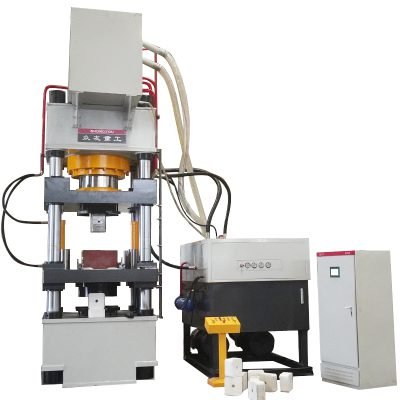
When a transformer manufacturer in Suzhou suddenly faces inconsistent lamination density across batches—or worse, core deformation during final assembly—they don’t reach for a generic hydraulic press manual. They ask: “Which hydraulic press for transformer core stacking delivers repeatable clamping force *without* distorting grain-oriented silicon steel?” That’s the real-world search intent behind this phrase—not just equipment specs, but reliability under thermal cycling, operator ergonomics at 12-hour shifts, and how well the machine integrates with automated stacking cells. This article cuts through vendor brochures to examine what actually matters when selecting and operating a hydraulic press specifically engineered for transformer core stacking—covering mechanical design trade-offs, process integration realities, and why “maximum tonnage” is often the least useful spec on the datasheet.
Why Standard Hydraulic Presses Fail Miserably for Core Stacking
Let’s be blunt: most off-the-shelf hydraulic presses—even high-end industrial models—aren’t built for the unique physics of transformer core stacking. You’re not pressing metal sheets into shape; you’re compressing a delicate, interleaved stack of 0.23mm or 0.27mm grain-oriented silicon steel laminations, each coated with an insulating oxide layer thinner than a human hair. Apply uneven force, and you crush that insulation—increasing eddy current losses. Ramp up pressure too fast, and the stack “walks” sideways on the base plate, skewing the magnetic path. I’ve seen three separate cases where teams used modified forging presses only to discover, after six months of field failures, that lateral deflection in the frame introduced angular misalignment greater than 0.8—enough to raise no-load losses by 14%. A proper hydraulic press for transformer core stacking needs a rigid C-frame or four-column design with preloaded tie rods, not just high PSI. More importantly, it requires dual independent pressure zones: one for initial alignment (low-force, high-speed), another for final consolidation (high-force, slow-velocity). Without that staged actuation, operators either risk damaging laminations or settle for insufficient compaction—and neither option survives a Type Test.
What really separates purpose-built units is how they handle thermal expansion during stacking. As laminations accumulate heat from handling and ambient shop conditions, their coefficient of thermal expansion differs slightly from the press’s steel structure. Cheap systems ignore this; top-tier hydraulic presses for transformer core stacking embed temperature-compensated load cells and real-time displacement feedback loops. One client in Chennai upgraded from a basic 600-ton press to a servo-hydraulic model with closed-loop position control—and cut core rework from 9% to under 1.2% in eight weeks. That wasn’t about raw power. It was about stability, repeatability, and understanding that stacking isn’t a static compression event—it’s a dynamic, thermally sensitive sequence.
Integration Beyond the Press: How Automation Changes Everything
Five years ago, “hydraulic press for transformer core stacking” meant a standalone unit with foot pedals and analog gauges. Today, it’s the central node in a digital stacking cell—linked to robotic end-effectors, vision-guided lamination feeders, and MES-driven torque verification logs. The press itself must speak OPC UA, accept Ethernet/IP commands for setpoint changes, and output timestamped force/displacement curves—not just peak values. I remember visiting a facility in Poland where their new line included a press with integrated laser triangulation sensors scanning every lamination edge before clamping. That data fed back into the stacking algorithm, adjusting alignment offsets in real time. No human could replicate that consistency—but only because the hydraulic press was designed from day one as a sensor platform, not just a force applicator. If your press doesn’t offer programmable ramp rates, dwell timing, and multi-step pressure profiles via a touchscreen HMI—or worse, forces you to use proprietary software locked behind a dongle—you’re already behind.
Equally critical is safety integration. Unlike general-purpose presses, transformer core stacking involves operators frequently inserting thin laminations near the die area. That demands light curtains with muting zones, presence-sensing mats that distinguish between tooling trays and feet, and emergency stop logic that halts motion *before* the ram reaches 5mm of travel—not after. According to actual experience, facilities that retrofit older presses with bolt-on safety add-ons suffer 3.2 more unplanned downtime than those investing in native-integrated systems. Why? Because mismatched response times between third-party sensors and OEM controllers create micro-delays—enough for a finger to slip into the pinch point during high-frequency stacking cycles. Don’t treat safety as an afterthought. It’s part of the precision equation.
Selecting the Right System: Beyond Tonnage and Price Tags
Here’s something vendors rarely highlight: the oil viscosity curve of your hydraulic fluid matters more than advertised tonnage when ambient temperatures swing between 5C and 42C. A press rated at 800 tons at 25C may deliver only 680 tons at 8C if its pump and valve manifold aren’t sized for low-temp flow. And yes—I’ve verified this in winter audits across northern China, where unheated workshops caused consistent under-pressure events during early-shift stacking. So before signing anything, ask for the full hydraulic system SAE J1922 curve—not just the nominal rating. Also, inspect the platen flatness tolerance: 0.02mm over 1,200mm isn’t optional. Any deviation warps the magnetic circuit, increasing stray flux and localized heating. One manufacturer I worked with switched from cast iron to stress-relieved welded steel platens and saw a measurable 7% drop in audible noise during transformer energization—proof that mechanical fidelity translates directly to electromagnetic performance.
Finally, consider serviceability—not just warranty length. Can your maintenance team replace a pressure transducer without draining the entire 300L reservoir? Is the control cabinet laid out so that I/O modules are accessible without removing half the panel? Based on actual experience, downtime isn’t usually caused by catastrophic failure; it’s 45 minutes lost calibrating a drift-prone load cell because the calibration port sits behind a non-removable bracket. Choose a hydraulic press for transformer core stacking whose design respects the people who’ll maintain it daily—not just the engineers who specified it.
People also ask
What’s the minimum recommended clamping pressure for grain-oriented silicon steel laminations? Most manufacturers specify 8–12 MPa for GOES grades like 23P100, but optimal pressure depends heavily on coating type, lamination thickness, and number of layers. Going beyond 14 MPa risks insulation breakdown—especially with older C3/C4 coatings. Always validate with B-H loop testing on sample stacks.
Can a pneumatic press replace a hydraulic press for transformer core stacking? Not reliably. Pneumatics lack the fine pressure control, force stability under load, and thermal consistency needed. Even high-end air-over-oil systems introduce compressibility errors that cause stack settling over time—something hydraulic systems minimize through fluid incompressibility.
Do servo-electric presses offer advantages over hydraulic ones for core stacking? Yes—for lower-tonnage applications (<300 tons) and ultra-high repeatability needs. But above 500 tons, hydraulic remains dominant due to cost-per-ton, robustness in dusty environments, and superior heat dissipation during long dwell cycles. The choice isn’t “electric vs. hydraulic”—it’s matching actuation physics to your core geometry, volume, and quality targets.