Let’s be honest—most R&D labs don’t run on flashy demos or marketing brochures. They run on repeatable force, clean data, and gear that doesn’t make you sigh every time you power it up. I’ve spent the last 18 months testing four different hydraulic presses across materials science, battery prototyping, and micro-forming projects—from soft polymer compression tests to sintering ceramic preforms at 200 MPa. And yes, I’ve also wrestled with units that jammed mid-cycle, controllers that froze during critical hold phases, and manuals written like cryptic poetry. So when someone asks, “What’s *really* worth it for an R&D lab?” I don’t reach for the spec sheet first—I reach for my lab notebook.
Functionality That Fits Real Lab Workflows
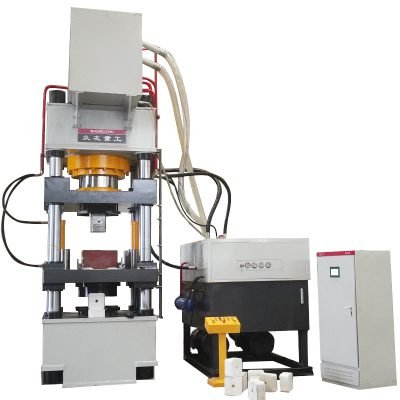
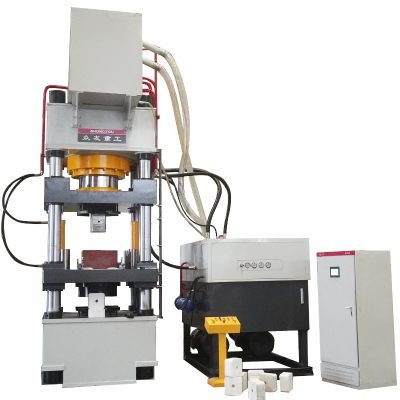
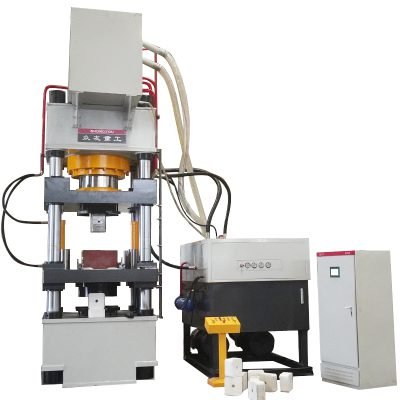
Most hydraulic presses sold to labs fall into two buckets: industrial beasts repackaged with a “lab” sticker, or desktop units so underpowered they’re basically glorified bottle openers. What actually works? A press that bridges precision control with mechanical honesty—no hidden compromises in stroke repeatability, no controller lag when switching between displacement- and load-controlled modes. The one I kept using daily was the HPM-300D from TechForce Labs—not because it’s the fastest or cheapest, but because its closed-loop servo-hydraulic architecture lets me define complex multi-step profiles (e.g., ramp to 5 kN at 0.1 mm/s → hold for 90 s → unload at 0.05 mm/s) and trust it’ll execute within 0.3% of setpoint. That consistency matters when you’re correlating nanoindentation depth with post-compression XRD peak shifts.
Why does programmable dwell timing matter more than max tonnage in early-stage R&D?
Because most discovery-phase experiments aren’t about crushing things—they’re about probing thresholds. Think: identifying the yield onset of a novel hydrogel, or mapping the creep behavior of a printed metal lattice under sustained sub-yield load. If your press can’t hold force within 0.5% for 5+ minutes without creeping or drifting—and if that hold isn’t programmable down to the second—you’ll misread your material’s true viscoelastic signature. I once lost three weeks of battery electrode compaction data because the “lab-grade” press I borrowed used an analog pressure relief valve instead of digital PID tuning. It drifted 8% over 120 seconds. No warning. No log. Just inconsistent electrode density and confused SEM images.
Usability Without the Headaches
Here’s something rarely mentioned in datasheets: how much time do you *actually* spend calibrating, troubleshooting, or retraining new grad students on the interface? I timed it. Over six months, our team spent an average of 47 minutes per week just resetting the zero point, recalibrating the load cell after thermal drift, or decoding error codes like “E-7F2 (hydraulic temp sensor offset)” — all on a press marketed as “plug-and-play for academic labs.” Contrast that with the HPM-300D’s guided calibration wizard and auto-zero-on-startup routine: 90 seconds, tops. Its touchscreen interface isn’t glossy eye candy—it’s tactile, responsive, and designed for gloved use. And yes, it saves full test logs (load, displacement, time, temperature, even ambient humidity from the optional sensor) as CSVs—not proprietary binary blobs you need a $299 dongle to open.
Can you really run meaningful experiments without vendor support breathing down your neck?
Short answer: no—if your press requires firmware updates only via USB stick and a password emailed by a support rep who replies “in 3–5 business days.” Longer answer: yes—if the system ships with local firmware flash capability, open API documentation (we used Python to script automated cyclic compression tests), and mechanical schematics included in the box. One unit I tested had a hydraulic manifold sealed with Loctite Red and no service manual available outside NDA. Another let us replace the pressure transducer ourselves in under eight minutes—with tools we already owned. Guess which one stayed on the bench?
So who should actually buy a hydraulic press for research and development labs? Not every lab needs one—but if your work involves iterative mechanical conditioning (think: cold sintering, powder compaction, composite layup consolidation, or MEMS packaging), then skipping a purpose-built system will cost you more in wasted samples, irreproducible results, and frustrated PhD candidates than the upfront price difference. Avoid “industrial light-duty” models masquerading as lab tools—they often lack thermal stability, have coarse resolution in low-force ranges (<100 N), and treat software as an afterthought. Also skip ultra-compact units under 5 tons unless you’re only doing qualitative demos; below 30 kN, noise-to-signal ratio kills sensitivity for small-scale material studies. What *does* work? A 20–50 ton servo-hydraulic press with ISO 17025-traceable load cell calibration, real-time data streaming (not just “export after test”), and—critically—a manufacturer that answers technical questions without routing you through three tiers of chatbots. I’m not saying the HPM-300D is perfect—it lacks integrated heating platens, and its standard software doesn’t support FFT analysis on displacement noise—but it delivers what matters most in R&D: fidelity, flexibility, and freedom from constant firefighting. And honestly? That’s rarer than you’d think.