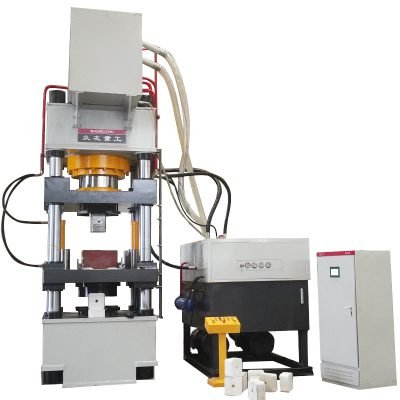
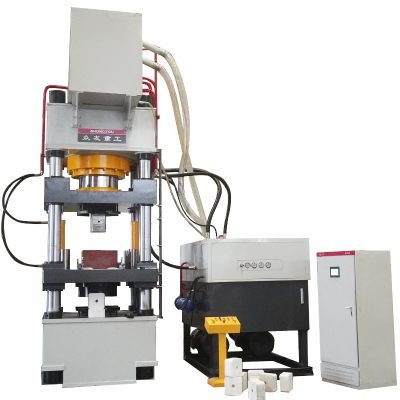
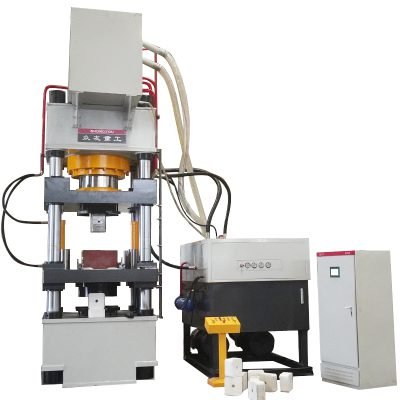
Two winters ago, I stood in a freezing workshop near Hohhot—wind howling, snow piling up against the warehouse doors—watching a brand-new salt brick machine sputter to life for the first time. The operator, a guy named Bat-Erdene who’d been making animal lick blocks since the ’90s, wiped grease off his gloves and muttered, “This one cost me 287,000 RMB… and it still hasn’t paid for itself.” That moment stuck with me—not because of the number, but because he said it like it was obvious, like anyone who’d ever tried compressing coarse, hygroscopic Inner Mongolian lake salt into stable, weather-resistant bricks would instantly nod in grim agreement.
Why “Inner Mongolia” Isn’t Just Geography—It’s a Technical Specification
You don’t price a salt brick machine the same way in Hohhot as you do in Guangdong. Humidity swings here go from -35C dry cold to 85% RH monsoon dampness in under six weeks. Local salt isn’t refined table salt—it’s harvested from dried-up soda lakes like Juyan Sea or Bayan Nur, loaded with magnesium chloride, calcium sulfate, and trace borates. That stuff clogs dies, corrodes hydraulic pistons, and makes standard compression ratios laughable. So when someone asks, “How much does a salt brick machine cost in Inner Mongolia?” they’re not just asking about sticker price—they’re asking about durability under grit, tolerance to thermal shock, and whether the feed system can handle clumped, damp crystals straight off the truck without pre-drying. I’ve seen machines priced at 198,000 RMB fail within 4 months—not because they were cheap, but because their auger design couldn’t move that sticky, mineral-heavy feed without jamming every 90 minutes.
Breaking Down the Real-World Price Bands (and What They Actually Deliver)
The “Entry-Level” Tier: 165,000–220,000 RMB
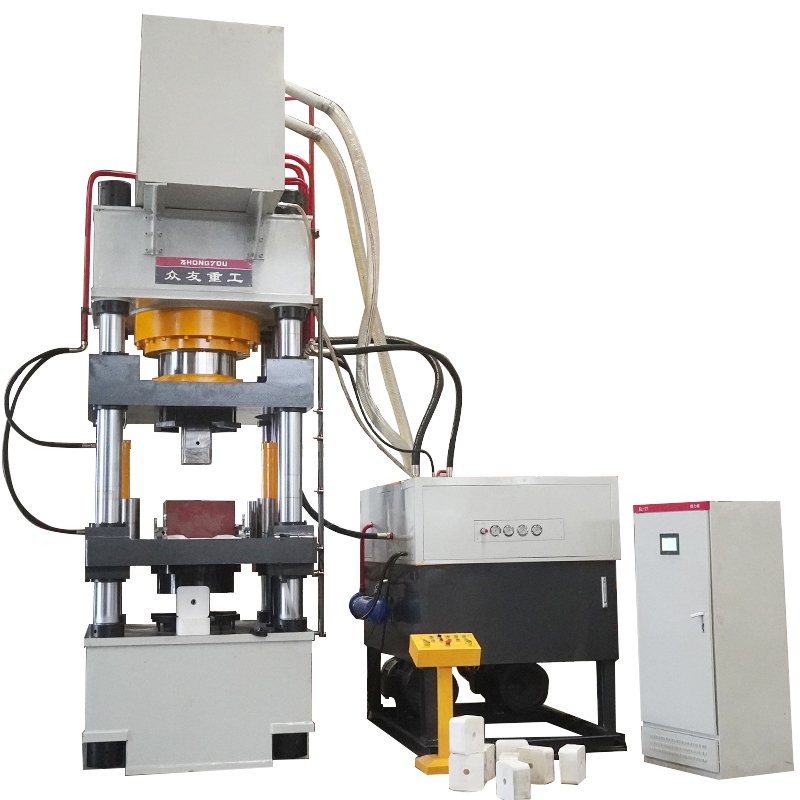
This is where most first-timers land—and where most regrets begin. Last year, a co-op in Xilin Gol bought a 200-ton hydraulic press advertised as “salt-brick ready.” Turned out the cylinder seals were rated for food-grade sodium chloride only—not the high-magnesium brine residue common in Inner Mongolian evaporation ponds. Within three months, oil contamination spiked, pressure dropped by 18%, and bricks started crumbling at the edges. They ended up retrofitting with stainless steel bushings and custom heat-treated dies—another 42,000 RMB on top. So yes, the base price looks tempting. But ask: Does it include moisture-resistant PLC controls? Is the frame welded with Q345B steel (not generic Q235)? And crucially—does the supplier have a service technician who’s actually driven a snowmobile to a remote pasture site in January?
The “Workhorse” Range: 260,000–390,000 RMB
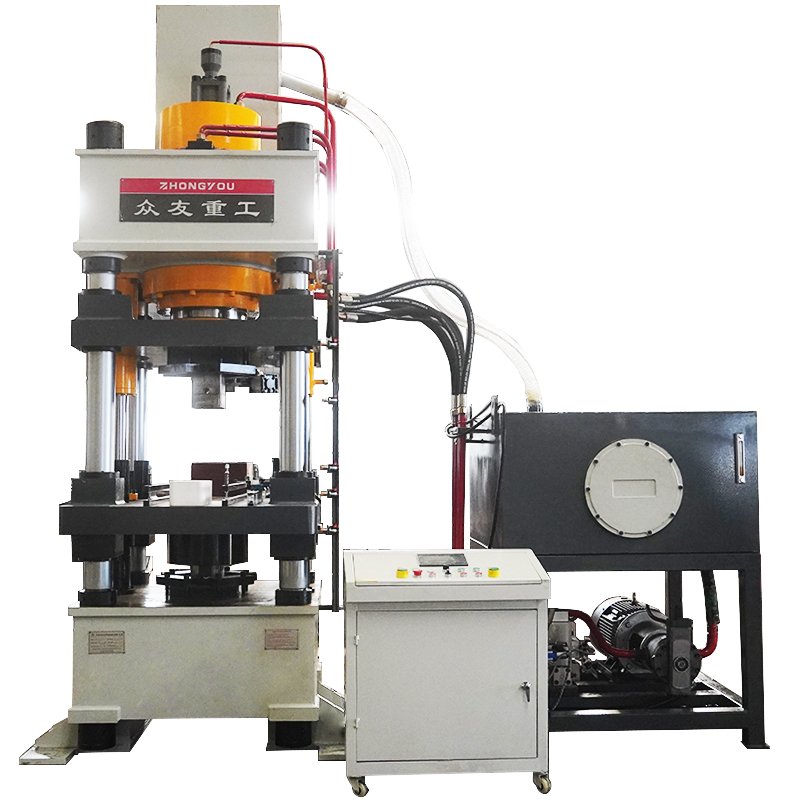
This is where things get honest. Machines in this bracket—like the YZL-500D series we installed last spring near Ordos—come with dual-stage vacuum deaeration, ceramic-coated compression chambers, and variable-frequency feeding calibrated for local salt density (which averages 1.18 g/cm, not the 1.22 assumed in coastal specs). One client, a family-run dairy near Baotou, runs two shifts daily pressing 3.2-ton batches of mixed-mineral salt bricks for yak herds. Their ROI hit break-even at month 14—not because the machine was cheaper, but because downtime averaged under 2.3 hours per month. That reliability? It’s baked into the price: thicker ram sleeves, redundant temperature sensors in the die cavity, and firmware updates that actually adapt to seasonal humidity drift. Worth every extra yuan? Absolutely—if your margin per brick is under 1.80, downtime costs more than depreciation.
So—What Would I Tell My Younger Self (or Anyone Buying Today)?
I’d tell them to skip the brochure and drive to the factory. Not the showroom—the actual assembly floor. Watch how they weld the hopper support brackets. Ask to see the last three service logs for that exact model in a cold-climate region. Better yet, call two existing users within 500 km of your location and ask: “When your machine froze solid at -29C, what broke first—and how long did it take them to fix it?” Because here’s the unvarnished truth: A salt brick machine in Inner Mongolia isn’t machinery. It’s infrastructure. It’s the difference between delivering consistent mineral supplementation to 400 head of livestock through March blizzards—or watching bricks disintegrate in storage while vets diagnose hypomagnesemia. Price tags lie. Operating logs don’t. Bat-Erdene’s machine? He upgraded the hydraulic manifold and added a heated die chamber last fall. Now he’s quoting 2.15 per brick—up from 1.62—and his repeat orders from herding cooperatives doubled. That’s not luck. That’s what happens when you pay for the environment—not just the equipment.