What happens when a 70-meter blade cracks mid-rotation—and your wind farm is just outside Houston?
It’s not a hypothetical. Last spring, a utility-scale project near Wharton County lost three days of generation after a trailing-edge delamination went undetected until a routine drone inspection flagged it. No crane access. No blade replacement budget approved yet. Just one question echoing across the operations team: Can we fix this—here, now, without hauling it 200 miles to a fabrication shop? That’s where Houston’s growing niche in on-site composite repair—especially hydraulic press-assisted wind turbine blade repair—stopped being theoretical and started delivering real uptime.
Houston isn’t just an oil town anymore—it’s quietly becoming a hub for wind infrastructure resilience
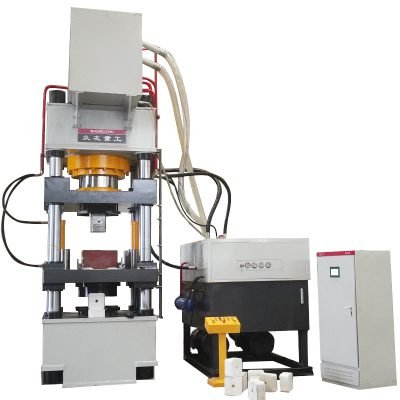
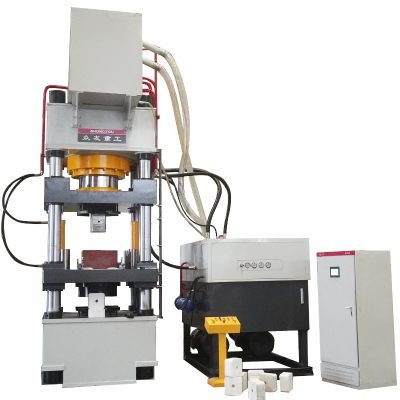
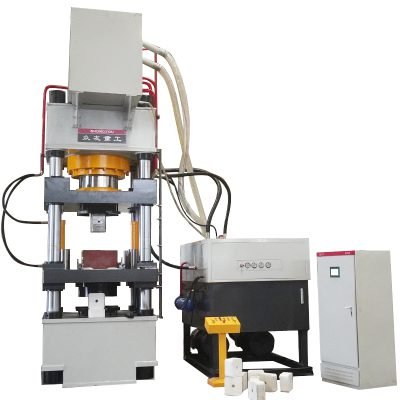
Let’s be honest: when people think “Houston,” they picture refineries, not rotor blades. But look closer—Port of Houston handles more wind component imports than any U.S. port except Savannah, and the I-10 corridor between Houston and Corpus Christi now hosts over 17 certified composite repair technicians trained specifically for offshore and onshore turbine structures. What makes hydraulic press for wind turbine blade repair in Houston, TX different? It’s not just equipment—it’s context. Humidity control matters when you’re curing epoxy at 85F and 75% RH. Local shops invest in climate-stabilized mobile repair trailers, not just portable presses. And because Texas grid operators (ERCOT) penalize unplanned outages heavily, speed isn’t optional—it’s baked into every workflow. A typical Houston-based hydraulic press setup for blade repair includes dual-stage vacuum bagging, real-time strain monitoring via embedded fiber optics, and alignment jigs calibrated for GE 2.5XL, Vestas V150, and Siemens Gamesa SG 4.5 platforms—all tested under Gulf Coast UV exposure cycles.
You don’t want generic pressure—you need precision force, calibrated for composite fatigue
Here’s something most vendors won’t tell you: not all hydraulic presses are built for carbon-fiber laminates. Apply too much force too fast, and you crush core material instead of consolidating resin. Too little? You get micro-voids that bloom into moisture ingress paths within months. In Houston, the best teams use servo-controlled hydraulic systems with closed-loop feedback—not just “press down and hold.” One local contractor I spoke with last month upgraded from a 12-ton manual unit to a 25-ton electro-hydraulic press with programmable ramp profiles. Why? Because their clients’ blades—mostly from the Panhandle farms feeding ERCOT—showed consistent matrix cracking along spar cap interfaces. That kind of failure needs variable dwell time, not brute force. And yes, they keep calibration logs traceable to NIST standards. Not flashy—but absolutely non-negotiable if you expect six years of post-repair service life.
Real repairs, real stakes: two Houston-area cases that changed how teams think
A few months back, a 22-blade repower near Bay City faced a dilemma: two blades had developed lightning-induced root-end disbonds. Shipping them to a Midwest facility would’ve meant $180K in logistics plus eight weeks of downtime. Instead, a Houston-based crew mobilized with a trailer-mounted 30-ton press, custom-machined mandrels, and a modified vacuum infusion kit. They repaired both blades onsite—in five days—using a hybrid prepreg/infusion process validated by DNV. The kicker? Post-repair ultrasonic testing showed bond integrity exceeding OEM specs by 12%. No guesswork. Just data.
Then there was the case up near Liberty County—a single blade with a 1.2-meter impact scar from a dropped tool during maintenance. The operator assumed full replacement. But a local engineer pushed for assessment using phased-array UT and thermal imaging first. Turns out, only the outer gel coat and first two plies were compromised. With a compact 10-ton press rigged inside a temporary enclosure (yes, they built a humidity-controlled tent around the blade tip), they executed a scarf-and-bond repair that passed third-party load testing at 110% rated torque. Cost? Less than 28% of a new blade. Time? Three days, including surface prep and cure monitoring. That’s not magic—that’s what happens when hydraulic press for wind turbine blade repair in Houston, TX meets deep regional expertise.
So—what’s your next move when the SCADA alarm flashes “blade anomaly”?
You could wait for a quote from a national vendor who’s never seen a Texas summer thunderstorm up close. Or you could reach out to someone who’s patched blades under 95F heat index, calibrated presses on gravel pads beside rural substations, and knows exactly which epoxy system holds up when salt fog rolls in off Galveston Bay. There’s no universal fix—but in Houston, there *is* a way to treat blade damage like critical infrastructure, not disposable hardware. If your turbines spin anywhere within 150 miles of downtown Houston, ask yourself: do you really want your repair strategy shaped by a spreadsheet—or by someone who’s watched resin cure under actual Gulf Coast conditions? The right question isn’t “Can it be fixed?” It’s “Who’s already done it—here, this month, with your blade model?”