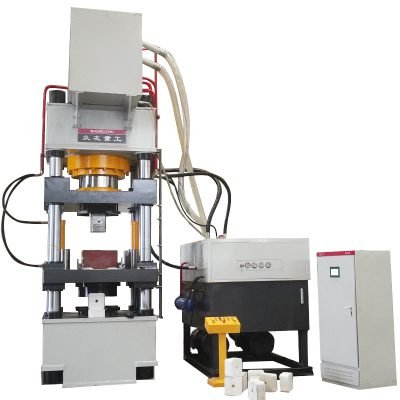
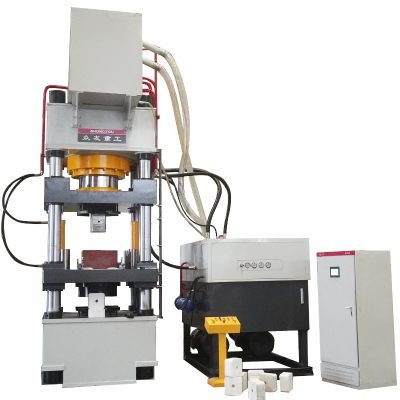
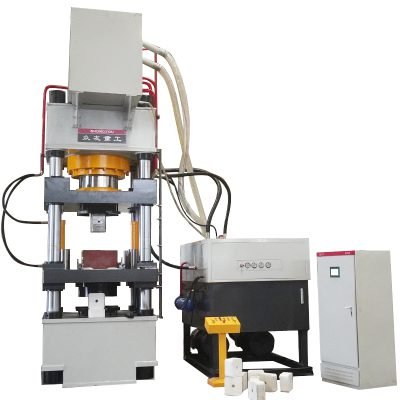
Hydraulic press machine price in USA reflects real-world value—not just sticker cost
When you’re sourcing a hydraulic press machine in USA, the first number you see rarely tells the full story. I’ve watched too many shops overpay for under-specified units—or worse, buy cheap imports only to face downtime, safety recalls, or retrofitting costs within 18 months. Price isn’t just about dollars per ton; it’s about cycle time consistency, maintenance predictability, and how long before that “bargain” becomes a bottleneck. Real-world hydraulic press machine price in USA balances upfront investment against operational resilience—and that balance shifts dramatically depending on your application, volume, and shop-floor realities.
It’s not just force—it’s repeatability under thermal load
Let’s be honest: most entry-level hydraulic presses advertise 100-ton capacity, but few hold 0.002″ stroke accuracy after 4 hours of continuous operation. Why? Because heat buildup in low-grade cylinders and undersized reservoirs causes fluid viscosity drift—and that translates directly into inconsistent forming pressure. A mid-tier press built with SAE 1035 steel rams, dual-stage cooling loops, and ISO 4406 Class 17/14/11 filtration doesn’t cost more because of “premium branding.” It costs more because it sustains rated tonnage at 92F ambient without derating. Think about a job shop running aluminum hub stampings—three shifts, 220 parts/hour. That press isn’t just moving metal; it’s holding dimensional tolerance across 1,200 cycles/day. Drop below 99.3% repeatability? You’re scrapping 17 parts per shift. Suddenly, a $28,500 unit with integrated thermal compensation looks less like an expense and more like insurance against scrap liability.
Integration isn’t optional—it’s your throughput multiplier
Ever seen a $42,000 press sitting idle while operators manually position, clamp, and verify part placement? I have—twice last month alone. Hydraulic press machine price in USA includes hidden cost layers when automation readiness isn’t baked in from day one. Not every shop needs robotic loading—but nearly all benefit from programmable logic controllers with analog I/O expansion, Ethernet/IP ports, and pre-wired sensor zones. One Midwest fabricator switched from a legacy unit to a PLC-enabled press with foot-switch bypass and dual-hand safety circuits. Their average cycle dropped from 48 to 31 seconds—not because the ram moved faster, but because part verification, dwell timing, and ejection sequencing now happen automatically. They recovered the $9,200 premium in 11 weeks. And yes, they kept the old foot pedal as a manual override—because real-world production still throws curveballs. The point? Integration isn’t about chasing “smart factory” buzzwords. It’s about eliminating human-variable delays so your press runs at 87% OEE instead of 63%.
Service access changes everything—especially after hour three of a midnight run
You don’t realize how critical service architecture is until your main cylinder seal fails at 11:47 p.m. on a Thursday. That’s when “hydraulic press machine price in USA” gets redefined—not by the invoice, but by the $380/hour tech call-out fee and the three-day lead time for a custom O-ring kit shipped from Ohio. Domestic manufacturers with regional service hubs (not just distributor reps) design for this. Their control panels use standardized DIN-rail mounts. Their hydraulic manifolds follow ISO 5783 porting specs—not proprietary fittings. Their manuals include torque sequences for every fastener larger than M6, plus QR codes linking to video walk-throughs of common rebuilds. A Tier-2 builder in Wisconsin stocks 92% of wear-part SKUs regionally and guarantees next-business-day dispatch for anything not in stock. That kind of support doesn’t inflate the base price—it compresses your total cost of ownership. One aerospace subcontractor calculated their five-year TCO: $187,000 for a “value-priced” import versus $203,000 for a U.S.-assembled press with local service coverage. But their unplanned downtime dropped from 112 hours/year to 19. That’s 93 hours of billable capacity reclaimed—worth more than $140,000 in margin alone.
Hydraulic press machine price in USA isn’t a number—it’s a decision framework
So what *is* a fair hydraulic press machine price in USA? It’s whatever lets you hit part spec, sustain schedule, and avoid fire-drill maintenance—without rewriting your P&L every quarter. It’s not found by scrolling the lowest listing on an industrial marketplace. It’s discovered through conversations about your worst repeat failure, your busiest shift’s bottleneck, and the last time you turned down work because your press couldn’t hold tolerance. If you’re comparing quotes right now, ask each supplier: “Show me your last three service calls for this model—what failed, how long did repair take, and was the part stocked locally?” That question alone filters out half the field. Ready to dig deeper? We’ve mapped pricing tiers across 12 U.S. manufacturers—by tonnage class, automation level, and service footprint—along with real shop-floor ROI timelines. Just let us know your typical part weight, material thickness, and weekly cycle count. No pitch. Just context.